
Ai Visitor Management in 2026: The Complete Enterprise Guide
How Ai-powered visitor management replaces paper logbooks with sub-10-second check-in, watchlist screening, and audit-ready compliance for enterprise lobbies.
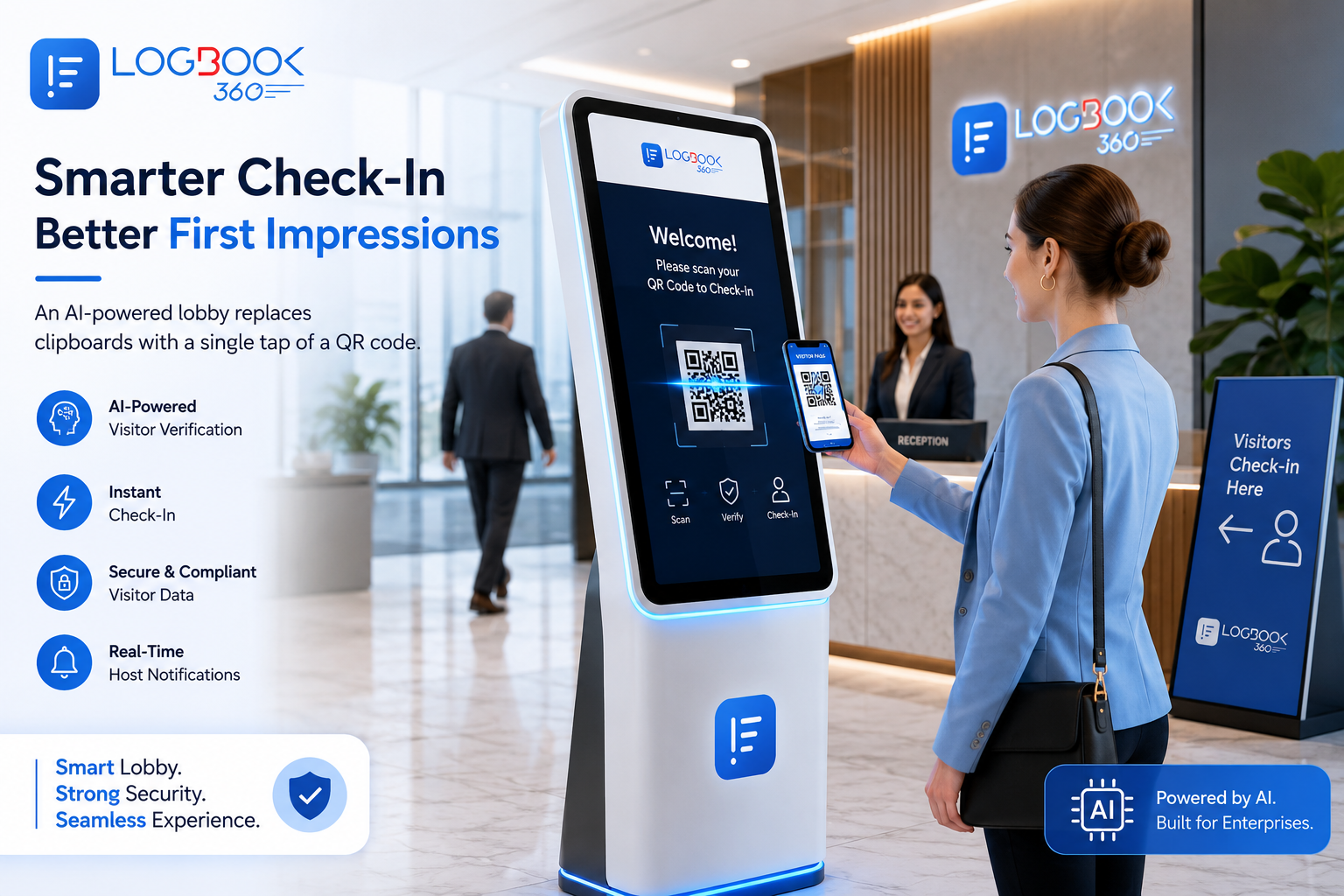
Enterprise lobbies have quietly become one of the highest-risk surfaces in physical security. Cyber budgets get nine figures of attention, while the front desk still runs on a clipboard and a sign-in book that anyone can flip back through. In 2026, that gap is closing fast: Ai-powered visitor management is moving from a productivity nice-to-have into a core compliance and security control.
This guide explains what modern visitor management actually does, why it's worth investing in this year, and the specific capabilities that separate a serious enterprise platform from a glorified iPad sign-in app.
What is Ai visitor management?
Ai visitor management is the combination of contactless check-in, live identity verification, real-time watchlist screening, automated host notifications, and tamper-evident audit logs, delivered through a kiosk, QR code, or facial recognition camera in your lobby.
The 'Ai' part matters. Liveness detection prevents photo-of-an-ID spoofing. Real-time watchlist screening cross-references every visitor against OFAC, sex offender registries, and any custom blocklist in milliseconds. Ai-driven host routing finds the right person to notify even when the visitor only knows a department name.
Why 2026 is the inflection point
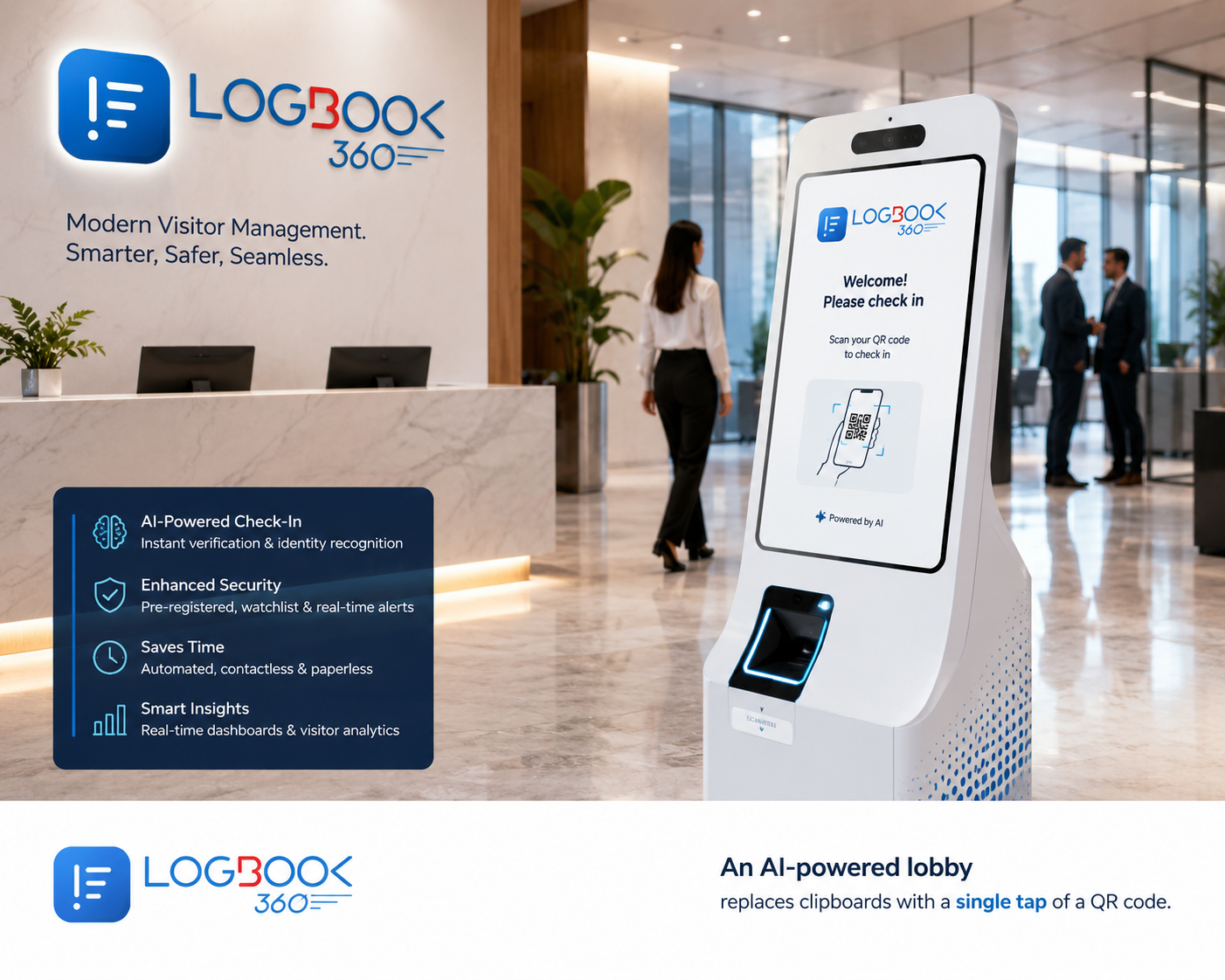
Three forces converged in the last 18 months. First, post-pandemic hybrid work made visitor patterns unpredictable: badges expire, calendars shift, and walk-ins are now the norm rather than the exception. Second, compliance frameworks (NIST SP 800-171, ISO 27001, SOC 2 CC6, CMMC 2.0) increasingly treat physical access as auditable scope. Third, Ai models for ID verification, liveness, and watchlist matching are now reliable enough to run on a $400 tablet at the front desk.
Core capabilities to evaluate
Not every platform that calls itself 'visitor management' belongs in an enterprise lobby. When you're evaluating vendors, these are the capabilities that actually matter:
- Contactless check-in via kiosk, QR pre-registration, or facial recognition. The visitor should never need to download an app.
- Government ID scan with Ai liveness detection. A photo of an ID is not the same as a verified human.
- Real-time cross-reference against OFAC, sex offender registries, denied-party lists, and custom blocklists.
- Automatic deny / escalate workflow when a flag is raised, with a documented review trail.
- Smart badge printing with photo, host, and auto-expiry on the same device.
- Host notification via Whatsapp, Teams, email, and SMS, with one-tap accept / decline / reschedule.
- Live evacuation list and one-click emergency broadcast to everyone on site.
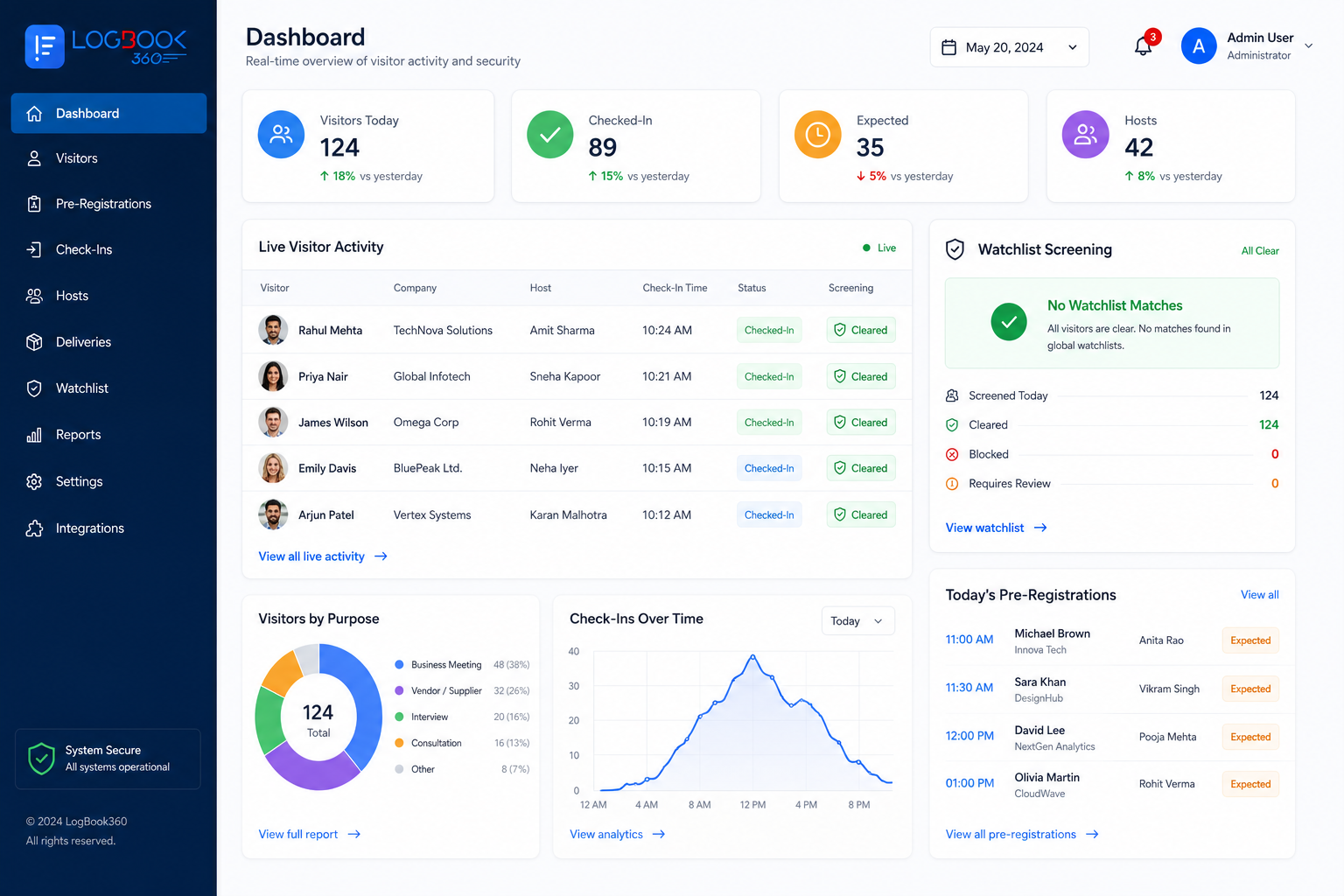
- Tamper-evident audit log with GDPR retention rules and one-click export for auditors.
Compliance frameworks it touches
If you're in a regulated industry, a visitor management platform is no longer just a productivity tool. It produces the evidence your auditors look for.
- ISO 27001 A.7.2 (Physical entry) and A.7.4 (Visitor registers).
- SOC 2 CC6.4 (Physical access controls) and CC6.1 (Logical access documentation).
- NIST SP 800-171 PE.3.136 and CMMC 2.0 visitor access controls for DoD contractors.
- GDPR Article 32 (security of processing), Article 17 (right to erasure), and Article 30 (records of processing) for visitor PII.
- ITAR / DDTC foreign national screening and denied-party verification.
- HIPAA physical safeguards (45 CFR §164.310) for healthcare facilities.
- OSHA / ISO 45001 emergency muster and headcount records.
Our deeper compliance guides break each of these down framework by framework. Start with the Compliance Center if you're scoping an audit.
ROI: payback in weeks, not years
The pure productivity math is straightforward. A 5-location enterprise running 80 walk-ins per location per day at a $35/hr fully loaded front-desk cost spends roughly $11,000 a month on manual check-in time. Drop that to a 10-second QR scan and you recover roughly 92% of that cost. At 50 locations, that's $1.5M a year before you count the compliance and incident-avoidance side.
But the bigger return shows up in audit cycles. Customers who replaced paper with LogBook360 typically reduce their compliance evidence-gathering effort by 60 to 80 hours per audit, because the visitor records, consent timestamps, watchlist screening results, and emergency muster reports are already audit-ready and exportable.
How to roll it out across multiple sites
Rolling visitor management out across more than a handful of sites is where most projects stall. The pattern that works in 2026:
- 1Pilot one flagship lobby for 4 to 6 weeks. Use it to nail your branded check-in flow, host notification preferences, and badge template.
- 2Run a parallel deployment at 2 to 3 sites with different visitor patterns (e.g. a manufacturing campus and a corporate HQ). This surfaces edge cases before they bite at scale.
- 3Standardize a 'site kit': kiosk hardware, label printer, network drop, signage, and a one-page operations runbook.
- 4Roll out the remaining sites in waves of 5 to 10, with a 2-week stabilization window between waves.
- 5Move security operations onto a single live monitoring dashboard so any flagged visitor at any site escalates to the same SOC.
Buyer's checklist
Hand this to your evaluation team. A serious enterprise visitor management platform should answer 'yes' to all of these:
- Sub-10-second average check-in time at the kiosk.
- Real-time screening against OFAC, sex offender registries, and custom blocklists.
- Live ID verification with Ai liveness detection.
- Host notifications via Whatsapp, Teams, email, and SMS, with response tracking.
- Tamper-evident audit log exportable to PDF, CSV, and SIEM.
- GDPR Article 17 right-to-erasure workflow built in.
- Emergency broadcast and live evacuation list on the same platform.
- Multi-tenant, multi-location architecture with role-based access.
- SOC 2 Type II and ISO 27001 on the vendor side.
- Predictable per-location pricing without hidden screening fees.
If your shortlist can't tick every box, you'll end up bolting on extra tools later. We built LogBook360 specifically so the answer is yes to all ten, on day one.