
A 22-Hospital Health Network Hit 100% HIPAA Visitor Compliance in 5 Months
A regional U.S. health network replaced paper visitor logs across 22 hospitals, met HIPAA physical safeguards (45 CFR §164.310), and rolled the platform out to outpatient clinics inside one budget cycle.
- Profile22-hospital integrated delivery network
- Size~24,000 staff, 1.4M visits/year
- RegionU.S. Mid-Atlantic
- FrameworkHIPAA, HITRUST CSF, Joint Commission
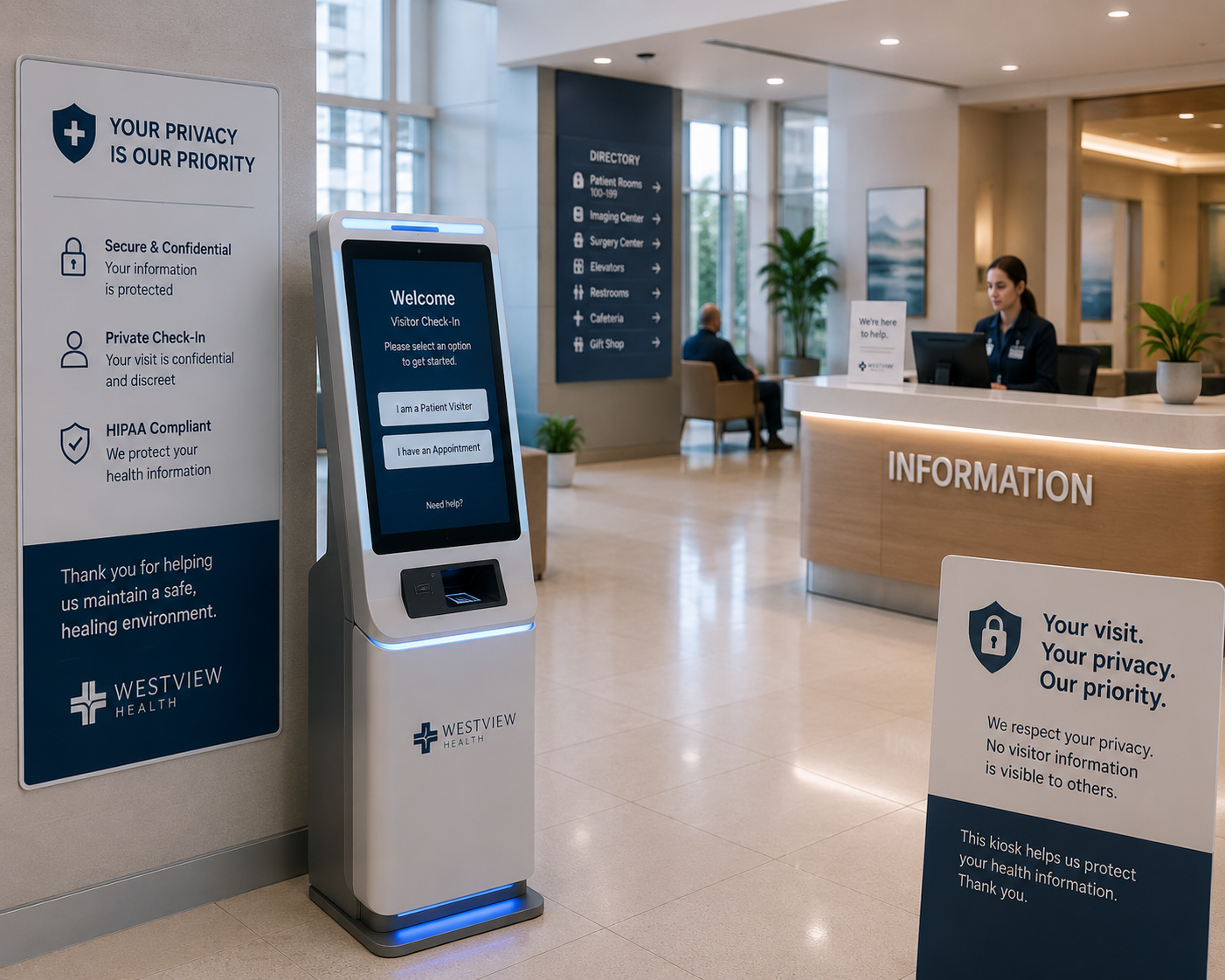
Hospital visitor management has two competing pressures. On one side, infection control, patient confidentiality, and HIPAA physical safeguards demand tight, auditable control. On the other side, visiting families need a check-in process that doesn't feel like airport security at the worst moment of their lives.
A regional U.S. health network with 22 hospitals and 47 outpatient clinics reconciled those two pressures in a 5-month rollout. Here's what they built.
Background
The customer operates an integrated delivery network across the U.S. Mid-Atlantic: 22 acute-care hospitals, 47 outpatient clinics, 24,000 staff, and roughly 1.4 million patient and visitor check-ins per year. The pre-existing system was a mix of paper sign-in sheets, three different visitor management vendors at different hospitals (legacy from prior acquisitions), and an outdated badge-printing workflow.
The catalyst was the HITRUST CSF certification renewal cycle and a Joint Commission triannual survey landing in the same fiscal year.
The HIPAA challenge
HIPAA §164.310 (physical safeguards) doesn't prescribe a specific visitor system, but the controls it requires are unambiguous:
- §164.310(a)(2)(iii) Access Control and Validation: procedures to validate a person's access to facilities based on their role.
- §164.310(a)(2)(iv) Maintenance Records: documentation of repairs and modifications to physical components.
- Patient confidentiality: visitor sign-in must not expose other patients' or visitors' identities.
- PHI handling: any visitor record that touches a patient name (e.g. 'visiting John Smith in 302B') is regulated PHI.
The legacy paper system failed every one of these. The patchwork of three vendors at different hospitals failed audit consistency.
Solution architecture
What the network deployed:
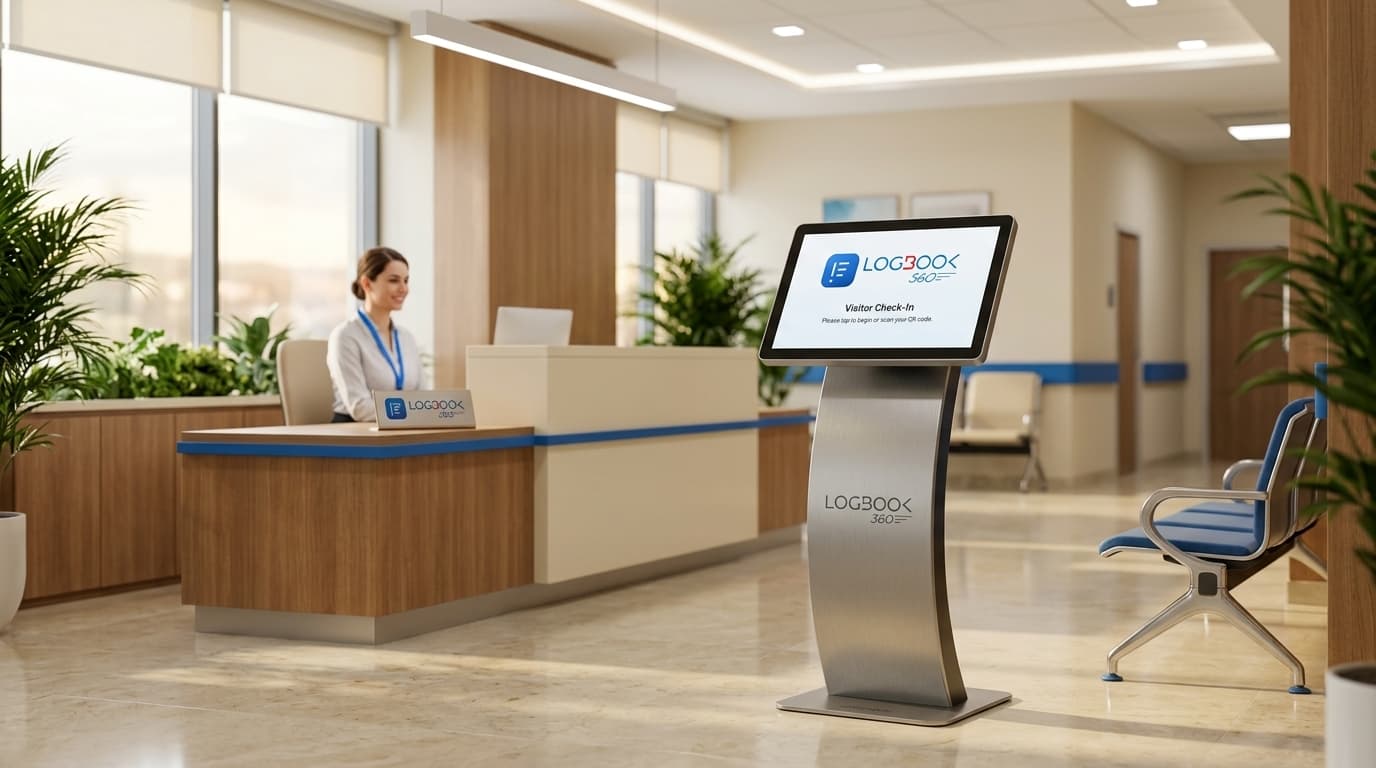
- Kiosk-based check-in at every hospital main entrance and ED entrance, with private screens (no shared visibility).
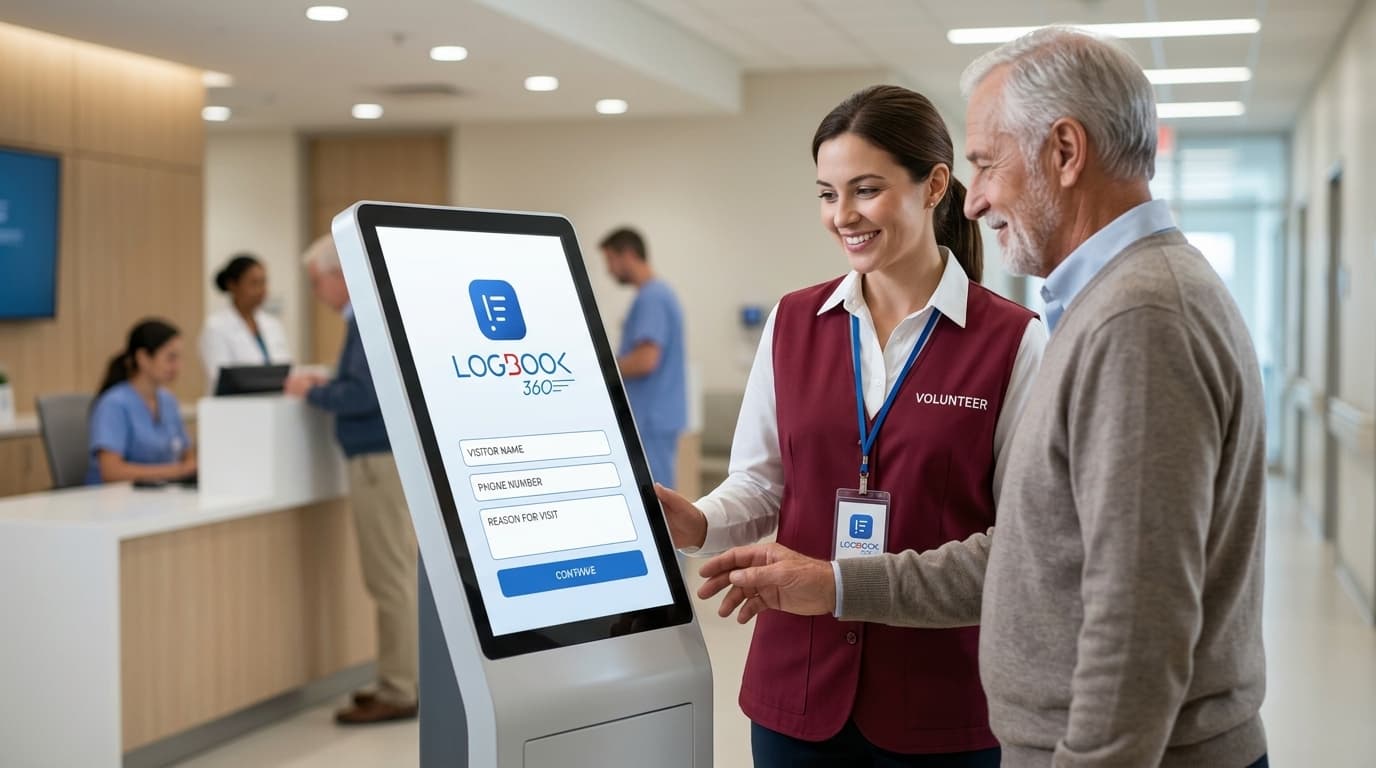
- Patient-room-based check-in flow: visitor enters the patient name, the platform routes notifications to the unit, never displays the patient name back to the next visitor.
- Health screening questionnaire pre-visit (configurable per facility for outbreak periods).
- OIG LEIE exclusion list screening for vendor and contractor visitors (not patient visitors).
- PHI-aware retention: visitor records auto-purged at 90 days unless tied to an incident or a documented patient complaint.
- Joint Commission-ready audit export: every visitor for any specified period, exported as PDF + CSV in one click.
Five-month rollout
- 1Month 1: Pilot at the flagship hospital (largest visitor volume). Tuned the patient-room flow and the health screening questionnaire.
- 2Month 2: Two regional hospitals onboarded in parallel. Migrated existing visitor records from one of the legacy vendors via a CSV bridge.
- 3Month 3-4: Wave deployment across the remaining 19 hospitals in groups of 5. Each wave included an in-person change-management session for front-desk staff.
- 4Month 5: Outpatient clinics added in batches of 10. Switch from kiosk-only to a kiosk + tablet form factor for smaller facilities.
Outcomes
- 100% coverage of HIPAA §164.310(a)(2)(iii) at every facility.
- Joint Commission survey returned zero findings on physical access controls.
- HITRUST CSF certification renewed without observation related to visitor management.
- Average check-in time under 10 seconds across the network.
- Visitor satisfaction (post-visit survey) up 18 percentage points vs the prior paper system.
- Patient confidentiality complaints related to lobby sign-in dropped to zero from a baseline of 4-6 per month.
“Joint Commission's surveyor walked through three of our hospitals and didn't find a single control gap on physical access. That's a first for us.”
What's next
The network is now rolling the same platform out to its 12 long-term care facilities, where vendor and family visitor controls overlap with state-specific elder-care regulations. The platform's per-site configuration model means a different retention schedule and screening profile per state can be deployed without re-architecting.
Could this be your story?
Talk to our team about deploying this pattern for your organization.
Book a demo